Le Creuset Round Dutch Oven Review: The Pot You Hand Down
Disclosure: This post contains affiliate links. If you buy through them, we may earn a commission at no extra cost to you.
How we reviewed this: this article is based on research, manufacturer specs, and published owner and expert reports. We did not test the product hands-on.
If you ask a group of cooks which pot they would save in a fire, many will name an enameled cast iron Dutch oven. Le Creuset has made them since 1925, and the round model in 5.5 quarts is the one most home cooks buy. This review draws on manufacturer information and published owner reports to cover what it does well, how to care for it, and whether the price makes sense.
Below we cover the design, cooking, care, and who should buy one.
Design
The pot is cast iron with a glossy enamel coating inside and out. The lid is heavy and fits tightly, with a knob that handles oven heat. Two wide loop handles let you grip the pot with oven mitts. The inside is light colored, so you can see browning as it happens. At 5.5 quarts, the pot feeds four to six people.

A pot roast in the Dutch oven on the stovetop: the light interior shows the browning clearly. Image: Didriks via Flickr, CC BY 2.0 (creativecommons.org/licenses/by/2.0/)
The enamel is the big difference from raw cast iron. It needs no seasoning, so you can cook tomato sauce or wine braises without stripping a finish. It also does not rust. You can wash it with soap, which makes it less fussy than a skillet.
Cooking
Cast iron holds heat and spreads it evenly. In a Dutch oven, that means a steady simmer with no hot spots on the bottom. Brown meat on the stove, add liquid, cover, and move the pot into a 300 degree oven. After a couple of hours, the meat is tender and the sauce is rich. The same pot makes soup, chili, rice, and braised vegetables.

Searing first, then covering: the heavy pot keeps heat steady through a long braise. Image: Didriks via Flickr, CC BY 2.0 (creativecommons.org/licenses/by/2.0/)
You can also bake bread in it. Preheat the empty pot in the oven, drop in your dough, and cover it. The lid traps steam, which gives the loaf a crisp, blistered crust. It is one of the best home methods for bakery-style bread.
The Lid and Moisture
The lid is heavy and fits snugly, so steam stays inside and returns to the food. That is why braised meat comes out moist. Some lids have tiny bumps underneath that help drip moisture back. Whatever the design, the key is the tight seal, which a thin pot cannot match.
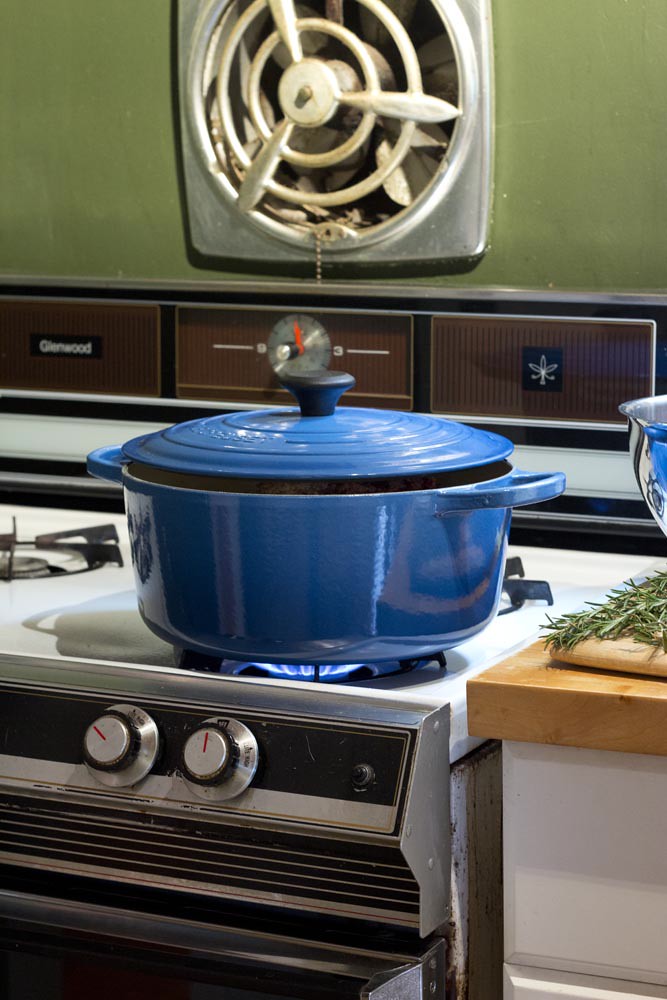
With the lid on, the pot holds in steam for long, slow cooking. Image: Didriks via Flickr, CC BY 2.0 (creativecommons.org/licenses/by/2.0/)
Care
Let the pot cool before washing. Use warm water, mild soap, and a soft sponge. For stuck food, soak with warm water, then scrub gently. Avoid metal tools and harsh scouring pads that scratch the enamel. Do not heat the pot empty on high, because that can crack the coating. Use wood or silicone tools on the inside.
Over time the light interior may stain. A paste of baking soda and water, left for a while, lifts most of it. The staining is cosmetic, and it does not change how the pot cooks.
Weight and Price
The pot weighs around 11 pounds empty, so a full one is heavy to lift. If you have wrist problems, think about this before you buy. The price is also high compared with budget pots. You pay for fit, finish, and a long life. Many owners say the pot lasts for decades with simple care.
Everyday Uses
Beyond braising, the pot does a lot. Use it to deep-fry at a safe depth, since the heavy walls hold oil temperature. Make a big pot of beans or rice. Roast a whole chicken in it, covered for the first hour and uncovered to crisp the skin. It also works as a serving dish, since the enamel keeps food warm at the table.
Because it moves from stove to oven, you can do the whole recipe in one pot. That means fewer dishes, and the browned bits left from searing go straight into the sauce. Cooks call these bits fond, and they carry a lot of flavor.
Choosing a Size
The 5.5 quart round size suits most households. A smaller pot is better for one or two people, and a bigger one helps if you cook for a crowd or like leftovers. Keep in mind that a larger pot is also heavier, so pick the biggest size you can comfortably lift when it is full.
Color is a matter of taste. The glossy finish comes in many shades, and the cooking is the same in each. The light interior works the same in all of them.
Who Should Buy It
Buy it if you braise, bake bread, or cook stews often, and want a pot that will last. Skip it if you rarely cook slow dishes or want a light pot. A cheaper enameled pot gives you most of the same cooking, with a shorter life.
Pros and Cons
Pros
- Even, steady heat for braises, stews, and bread
- Enamel needs no seasoning and does not react with acid
- Tight lid keeps moisture in during long cooks
- Goes from stovetop to oven to table
- Lasts for decades, and the brand backs it for life
Cons
- Heavy, especially when full
- Costs far more than a basic pot
- Enamel can chip if banged or overheated empty
- Light interior shows stains with use
Verdict
The Le Creuset round Dutch oven is the pot people end up passing down. It cooks slow food well, it cleans up easily, and it looks good enough to serve from. The price is the barrier. If you braise, bake bread, or make stews often, it is worth it. If you cook only simple meals, a cheaper enameled pot will do the job.